Showing posts with label #RefugeesWelcome. Show all posts

Tuesday, May 28, 2019

Support Refugees and Prevent Trafficking

Image result for with refugees
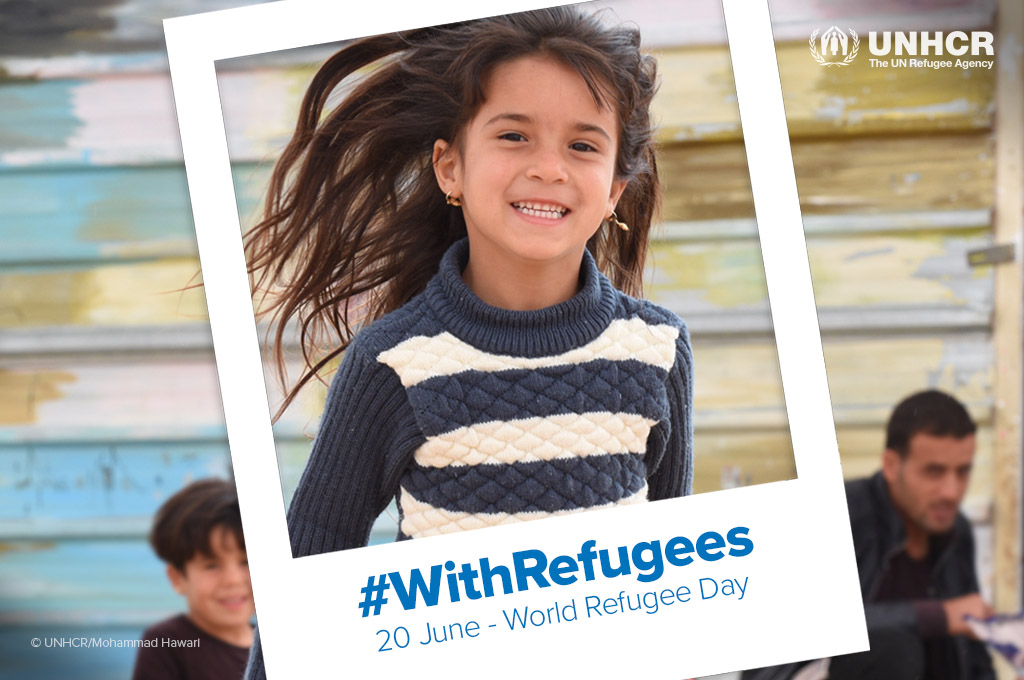
U.S. Catholic Sisters Against Human Trafficking (USCSAHT) invites you to join us in honoring refugees. On June 20, World Refugee Day, we commemorate the strength, courage, and resilience of refugees. Today, an unprecedented 68.5 million people around the world have been forced from home. Among them are nearly 25.4 million refugees, over half of whom are under the age of 18.1 Every 15 minutes a family is forced to flee their homeland.
We know that there is a strong link between forced migration and human trafficking. Men, women, and children are made vulnerable to human trafficking by the mass displacement caused by violence, extreme poverty, humanitarian crises, climate change, natural disasters, and conflict. Impoverished, vulnerable families are targeted by traffickers who promise to provide education and opportunity only to exploit them through forced labor, sexual exploitation, enslavement, or organ theft.
Stand in solidarity #WithRefugees and #StopRefugeeTrafficking on World Refugee Day, Thursday, June 20, 2019. Join us in calling our Representative and Senators and urging them to support two pro-refugee bills:

  1. H.R.2146 / S.1088 GRACE Act
  2. H.R. 2214 / S.1123 NO BAN Act
Visit our website to learn about our 2019 World Refugee Campaign and discover more ways that you can support refugees on June 20 and throughout year. You’ll find backgrounders, resources for prayer, stories of trafficked immigrants and  asylum seekers, sample social media posts and more.
If you would prefer to download and print the 2019 World Refugee Toolkit, you’ll find a PDF file HERE.
Join us and Stand in Solidarity #WithRefugees and #StopRefugeeTrafficking on World Refugee Day, Thursday, June 20! 

Monday, May 20, 2019

Support Refugee Resettlement

Refugee admissions to the US are at an all-time low. Congress must hold the State Department accountable to resettling 30,000 refugees this year (the goal set by the administration) and admitting a minimum of 75,000 refugees next year.
  • The GRACE Act would set a minimum refugee admissions goal of 95,000 people each year, which was the yearly average admission quota between 1980 and 2017.
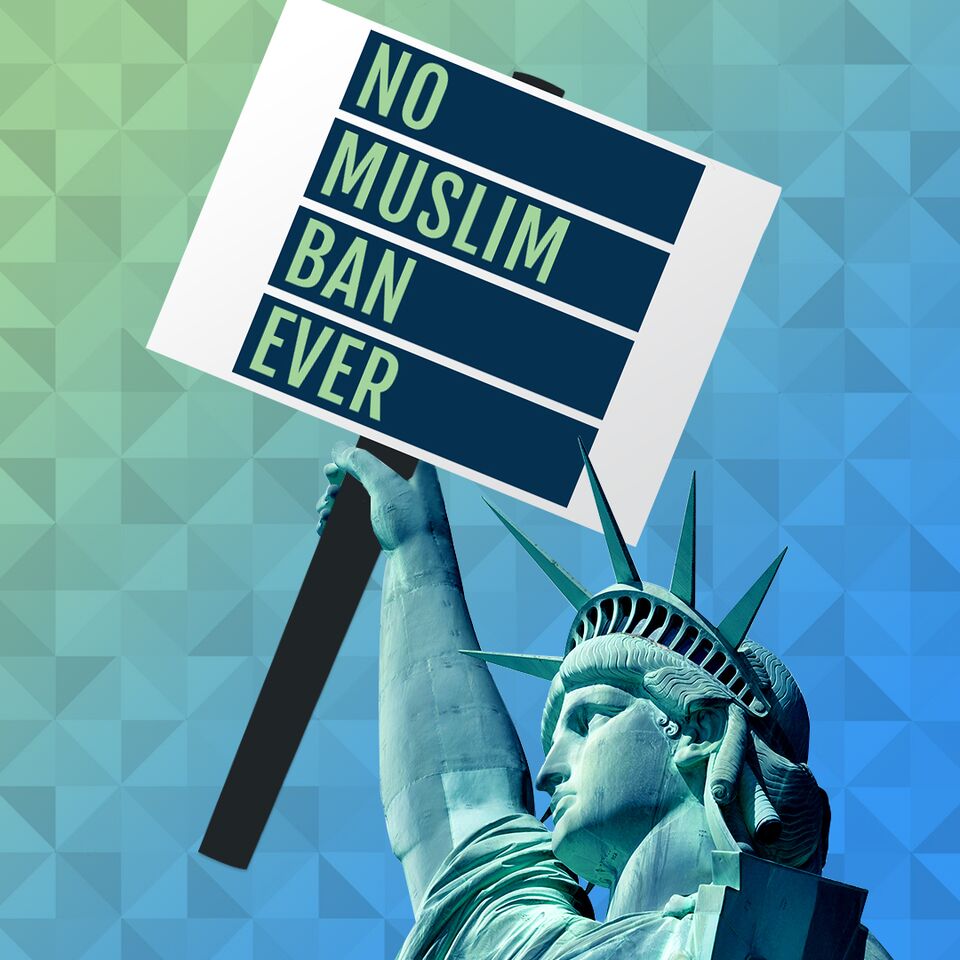
  • The NO BAN Act would repeal the Muslim bans, refugee bans, and asylum ban. It would also prevent the administration from setting bans that discriminate against a religion or nationality in the future. 
Click here to tell your representatives to hold the administration accountable to this year's resettlement goals and support pro-refugee legislation.


Thursday, November 29, 2018

Testimony from Sr. Bertha Flores on Ministering to Migrants in El Paso, TX

There are no words to describe what a shelter is. Only when one is a witness of the relief provided to so many people, can one value and appreciate a shelter in all its magnitude. We were blessed recently to be part of the solidarity shown to immigrants at the St. Charles Shelter in El Paso, Texas, and to see how it attracts, as a magnet, the unity of other people and institution. We arrived at the shelter on Monday, November 4, 2018. The staff toured the facilities with us and explained the policies and daily procedures.
St. Charles Borromeo Seminary in El Paso, TX
The Saint Charles Shelter operates with a team of volunteers, most of whom are women 50 years old or older, who provide services to the migrants related to food, lodging, laundry, and telephone connections with their relatives or with those who will receive them. They also provide transportation services to bus stations or to the airport. Ten full-time volunteers live at the shelter.

The maximum capacity at the shelter is 100. Thirty to forty migrants arrive daily; at times this number increases to sixty or seventy. They come from Honduras, San Salvador, Guatemala a, d Brazil and stay for two or three days.

Volunteers cook and serve breakfast. Lunch and dinner are prepared by different groups from parishes in El Paso and neighboring places. Towels and sheets used by the refugees are washed daily; blankets are disinfected with spray.

Every day, a bus drives people from Migration Detention Centers to the eight different shelters in El Paso. Most of them are detained at these shelters from four to fifteen days where they receive only one meal a day and can bathe only once during their stay. The temperature in the Detention Centers is kept low, so when the immigrants reach the shelter, they are exhausted, and most of the children have colds. Most immigrants travel with one or two children, and some bring babies.

Many experience various forms of stress. One afternoon, a woman who traveled alone with her five-year old child fainted while she was waiting to take a shower. The child was very scared and cried. He feared that his mother could die. Those minutes seemed like hours to us until his mother, a 24-year old woman, recovered.

When the immigrants arrive at the shelter, after we welcome them, they register and contact by telephone the people who will receive them in this country. They call across the country – to New Jersey, Maryland, Maine, New York, Massachusetts, Virginia, North Carolina, North Dakota, South Dakota, Indiana, Missouri, Kansas, California, Louisiana, Georgia, Florida, Texas, New México– and because they have no money, they ask their contacts to buy tickets for their trip. They are always hungry when they arrive. It is very moving to see how the babies “devour” food. If they drop a piece of food, they pick it up with their little hands and put it in their mouths. Sometimes the pieces of food are so small that they could be considered crumbs. It is difficult to hold back our tears when we see this. The babies are not the only ones who do this; children and adults do the same. After dinner, the atmosphere changes and they begin to feel the effects of the warm welcome and hospitality they have received.


Before their departure from the shelter, we give the migrants clothes suitable for the places where they will go. We also provide them with a backpack for their use during the trip containing items for personal hygiene, a towel, a blanket and a pillow.

But why do they come here?

Most of them are escaping from extreme poverty conditions and from the violence of organized crime which is increasing in Central America. Yesterday, a couple with three children arrived from Guatemala. They had to run away because two armed men, covered with hoods, demanded the payment of a fee for the small business they have there. Because they did not receive the fee, they shot the husband six times, at point-blank range, and they left him, presuming he was dead. Fortunately, he survived. He still has the marks of the six bullets around his waist and heart. One of the bullets broke a bone in his arm and he is wearing a metal support with six screws. Thanks be to God he is alive.

Yesterday, we received three small girls with their heads full of lice. They were very frightened and were crying. Thank God we had an excellent medicine cabinet so we could give them the first treatment. Word spread that I was excellent in treating this problem and I was told that others who needed attention would be referred to me!

Some of the immigrants arrive very ill with colds and other ailments. Yesterday, a boy and a girl with chicken pox came to the shelter. A doctor, who visits every day after work, immediately took the necessary precautions. The mothers take care of the smaller children and those who are ill.

The children are a living lesson of resilience. They arrive exhausted, sad and nervous, but the next day they are outside playing football and are happy! Usually, their parents join them.  Many mother care for the smallest ones or those who are sick.

As the days go by our energy is exhausted, and after a week we must take a pause and rest to recover strength and energy.   .

Tuesday, November 27, 2018

LCWR Calls for the Welcome and Humane Treatment of Arriving Migrants

The Leadership Conference of Women Religious (LCWR) is deeply troubled by President Trump’s continued denigration of those fleeing untenable situations in their home countries. These are mothers and fathers, sisters and brothers who have been forced from their homes by unimaginable violence and insecurity; runaway corruption; and droughts and floods linked to climate change. These are women and girls fleeing intolerable situations of domestic violence. These are young men and women who have no access to quality education and no hope of economic opportunity.
These are courageous people who have rejected cultures of corruption and exploitation. They are traveling the same road trod by our forbearers who fled tyranny and violence in search of the American dream. They are people of hope and promise who only want the opportunity to contribute their toil and talent to this nation.
We reject the president’s rhetoric of fear and policy of division that poisons our politics. We choose instead to embrace a dream for America that is filled with hope for a nation united in service of the common good. We stand with Pope Francis who calls us to “promote the dignity of all our brothers and sisters, particularly the poor and the excluded of society, those who are abandoned, immigrants and those who suffer violence and human trafficking.”
We urge the administration to manage refugee arrivals humanely and in a manner that respects their dignity and rights under US and international law and to:
  • Allow migrants to approach our border and ask for protection in the United States and to be admitted for processing in a timely manner. 
  • Ensure that asylum seekers have access to legal counsel and receive a fair resolution of their claim.
  • Guarantee that parents and children stay together after they are apprehended. Holding families indefinitely in detention or detaining parents while releasing their children violates the values of this nation and the standards set forth in the Flores settlement.
  • Eschew detention of those awaiting adjudication of their asylum petitions in favor of alternatives that are more humane and more cost efficient.
  • Direct Homeland Security to cooperate with faith-based and humanitarian organizations who are prepared to assist asylum-seekers.
The United States has a long and proud history of welcoming immigrants and sheltering refugees. Women religious have been blessed to be able to accompany and serve migrant communities across this country for a very long time. We will continue to welcome them as our national history demands and our faith requires.


Monday, July 2, 2018

CCVI JPIC Office Statement re: Muslim Ban

Related image
The CCVI Office of Justice, Peace, and Integrity of Creation joins with the Leadership Conference of Women Religious (LCWR) in expressing our deep concern about the recent SCOTUS decision to uphold President Trump's 'Muslim Ban.'  Since the Congregation's founding in 1869 we have both served with and served people of many different faiths. Currently in our sponsored ministries we have employees and students of many faiths.  

Together with the other member congregations of LCWR, we will continue to stand with the Muslim community and all who are subjected to the deeply troubling discriminatory policies of this administration. We call on Congress to exercise its power to challenge the President’s offensive and dangerous policy and ensure that the rights guaranteed by the Constitution are upheld.


Read the full Statement by the Leadership Conference of Women Religious

The Leadership Conference of Woman Religious is deeply troubled by the Supreme Court’s decision in the case of President Donald J. Trump v. State of Hawaii that challenged the legality of the Trump Administration’s third attempt at a Muslim ban. The court’s flawed ruling adds to the climate of fear and anti-Muslim sentiment in this country and threatens the values upon which our national community is built. 

As women of faith, as Catholic sisters, we believe that all people are created in God’s image, all are worthy of respect, and all are entitled to the protection of their human rights and religious liberty. We strongly object to President Trump’s continued attempts to use his authority to create policy by fiat, particularly when that policy is used to deny access to our Muslim sisters and brothers because of their religion. Such discrimination violates our deeply held faith beliefs and is inimical to the principles upon which this nation was founded.

LCWR joined other faith-based groups in filing amicus briefs in this case challenging the government-imposed anti-Muslim discrimination. When religious-based discrimination is permitted, especially when sanctioned by those at the highest levels of government, the free-exercise of religion by members of all faiths is threatened.

We will stand with the Muslim community and all who are subjected to the deeply troubling discriminatory policies of this administration. We call on Congress to exercise its power to challenge the President’s offensive and dangerous policy and ensure that the rights guaranteed by the Constitution are upheld.

Wednesday, June 13, 2018

20 Action Points for Refugees and Immigrants

Image result for pope francis refugeesFrom the beginning of his pontificate, using persuasive words and deeds, Pope Francis has urged the Church to accompany all people who are compelled to leave their country. In 2017, he established the Migrants and Refugees Section (M&R) to help him implement this pastoral objective. While M&R forms part of the new Dicastery for Promoting Integral Human Development under the direction of Cardinal Peter Turkson, the Section is personally guided by the Holy Father for the time being. Concerned with immediate humanitarian needs as well as long-term integral human development, the M&R Section focuses on the legal and policy frameworks which govern migration; on understanding the structural causes of forced displacement; and on achieving beneficial changes in the long run. 

Image result for refugees welcomeMigration has four possible stages. Migrants may be leaving their place of origin; in transit; arriving, with its subsequent process of integration; and perhaps choosing or obliged to return to their former homeland. In each of these stages, what is happening and why it is happening are of great interest. The Church encourages the Catholic faithful and everyone of good will to respond personally and communally to the material and spiritual needs of asylum seekers, refugees, migrants, internally displaced persons and victims of human trafficking.

Pope Francis knows what asylum-seekers, migrants and refugees need. We should welcome and protect them, he says, we should promote and integrate them. To do all this, here are some resources you can use in your community or parish … plus some policies to advocate in your country and at the U.N. level.

20 Pastoral Action Items:

Depending where you live, you may find refugees and migrants arriving, leaving, passing through, settling, and even returning to their place of origin. This is your chance to get personally involved in practical and spiritual ways. Lend them a hand and become their neighbor.

DOWNLOAD HERE


20 Government Action Items:
What about the laws and policies which govern human mobility in your own country and all over the world? Take these policy proposals up in your dialogue with your government and international organizations as they prepare the new Global Compacts on Migrants and on Refugees in 2018.

DOWNLOAD HERE

Full Packet
And you can also download the full packet of all the above information, including Pope Francis' message for World Day of Peace on Migrants and Refugees. This booklet presents three documents which provide the teaching, reflections and pastoral guidance of Pope Francis regarding the various issues concerning migrants and refugees. 

Monday, June 19, 2017

Refugees: An opportunity to grow together

“Let us all, as one human family, strive to build bridges of solidarity rather than walls of division.” Read this Ecumenical statement which we join in solidarity with on this World Refugee Day.

The Christian Bible tells the story of two men, Peter and Cornelius, utterly divided by religious belief and culture, who in encountering each other discovered a truth about God’s common will for them that neither had previously grasped. They learnt that the Holy Spirit brings down walls and unites those who might think that they have nothing in common.


All around the world, women, men, and children are forced by violence, persecution, natural and human-caused disasters, famine, and other factors, to leave their homelands. Their desire to escape suffering is stronger than the barriers erected to block their way. The opposition by some countries to the migration of forcibly displaced people will not keep those who undergo unbearable suffering from leaving their homes.

Wealthy countries cannot evade their responsibility for the wounds inflicted on our planet – environmental disasters, the arms trade, developmental inequality – that drive forced migration and human trafficking. While it is true that the arrival of migrants in more developed countries can present real and significant challenges, it can also be an opportunity for openness and change. Pope Francis poses this question to us: “How can we experience these changes not as obstacles to genuine development, but rather as opportunities for genuine human, social and spiritual growth?” Societies that find the courage and the vision to go beyond the fear of foreigners and migrants soon discover the riches that migrants bring with them, and always have.

If we, as a human family, insist on only ever seeing refugees as a burden, we deprive ourselves of the opportunities for solidarity that are also always opportunities for mutual learning, mutual enrichment, and mutual growth.

It is not enough for Christians to profess to love Christ: belief is authentic only if it is expressed in loving action. We are one Body of Christ, undivided. In the words of Dietrich Bonhoeffer, “It is only through Jesus Christ that we are brothers and sisters of one another…. Through Christ our mutual belonging is real, integral, and for all time.” If we are one body, we are knitted into a solidarity that defines us and makes demands of us.
Signs of solidarity can be multiplied beyond the borders of religion and culture. Meeting believers of other persuasions encourages us to deepen our knowledge of our own faith, and in our encounter with our refugee brothers and sisters, God speaks to us and blesses us as He did Cornelius and Peter.

In every genuine encounter, an exchange of gifts takes place. Sharing with others what we have and own, we discover that all is given freely by God. At the same time, in welcoming those whom we encounter, we meet the God who is always already present with the vulnerable, at the peripheries, and in the other.

Increasingly around the world we witness the building of walls to keep out the displaced: not just physical walls, but also walls of fear, prejudice, hatred, and ideology. Let us all, as one human family, strive to build bridges of solidarity rather than walls of division. Our refugee sisters and brothers present us with opportunities for mutual enrichment and flourishing: it is God who brings us together.


With the development of new international frameworks – Global Compacts on Migrants and on Refugees – in 2018, States should not only ensure a more effective responsibility-sharing in response to large movements, but they should also accept the opportunity to recognize and highlight the significant contributions that refugees and migrants make in their host communities.


Thursday, June 15, 2017

Take Action to Stand with Refugees

We are facing the worst refugee crisis in global history, and it is critical that as a nation, we rise to the challenge and live out our values grounded in compassion. We cannot turn our backs on refugees facing their darkest hours. We must commit to responding with demonstrations of welcome.

June 20 is World Refugee Day. We invite you to join immigration and refugee advocates across the nation and around the world in pledging to raise awareness and welcome refugees. Contact Congress in the lead up to June 20. Plan an event for June 20 or for the weeks that follow.

Refugee advocates have created multiple resources to help you and your constituents stand in solidarity with refugees:
·         Join the Stand With Refugee Campaign from June 12-16. They want to flood Congress with calls in support of higher refugee admissions and robust funding for overseas refugee protection & domestic resettlement services. Please spread the word to your networks. Find details and take action at: http://www.standwithrefugees.us/
·         Justice for immigrants has put together a toolkit with prayers, sample talking points and letters to the editor, social media examples, etc. Find it at: https://justiceforimmigrants.org/take-action/world-refugee-day/
·         The Refugee Council USA has also developed a toolkit which is available at: http://www.rcusa.org/world-refugee-day/
·         The Interfaith Immigration Coalition has developed a Refugees Welcome Toolkit that could be used this month or anytime to help you plan a welcoming event. Find it at: http://www.interfaithimmigration.org/wp-content/uploads/2013/03/Refugees-Welcome-Toolkit_5.12.16.pdf

You can also learn more and observe World Refugee Day in one or more of the following ways:


Saturday, April 29, 2017

Solidarity March and Mass with Immigrants and Refugees

On Saturday, April 8, 2017 hundreds of people gathered at the campus of St. Louis University to stand and march in solidarity with our immigrant and refugee neighbors.  This Solidarity March and Mass at the St. Louis Cathedral Basilica was sponsored by the Archdiocese of St. Louis and co-sponsored by a number of other religious congregations including the Sisters of Charity of the Incarnate Word.  Present at the march representing the Congregation was Sr. Anne Marie Burke, Sr. Pilar Neira, and Jennifer Reyes Lay. 

The group gathered began the event with a series of prayers and songs in both English and Spanish, and reflections led by immigrants and refugees and those who serve them.  Then after about 30 minutes we began a march of solidarity down Lindell Ave. for about one mile, carrying signs of support welcoming immigrants and refugees as a faith commitment.  There were also songs and chants as we marched both in English and Spanish. 

The march ended at the Cathedral Basilica of St. Louis where a Mass of Solidarity was celebrated.  The Mass was a beautiful multi-cultural celebration incorporating seven languages throughout in prayer and song.  The homilist exclaimed with great joy that this was the first Mass celebrated in Spanish in the Basilica and the whole congregation gathered applauded and cheered!  It was truly a beautiful witness of the diverse Catholic community in St. Louis coming together to celebrate our faith and show our commitment to standing together in these difficult times.

Monday, February 13, 2017

Take Action to Build Bridges, Not Walls!

LCWR is partnering with Faith In Public Life (FPL) in a prayer campaign to call on members of Congress to overturn President Trump's executive orders through public prayer vigils scheduled Feb. 17th-20th. These national days of prayerful action are tied to the anniversary of the Pope's visit to the border and the upcoming Congressional recess (Feb. 21-24th). 

One year ago, when Pope Francis prayed for migrants and refugees at the U.S.-Mexican border he transformed a dusty fence into an oasis of hope. Just days into the Trump administration, immigrant and refugee families are now at greater risk than ever.  We need to “Build bridges, not walls”.

We will be kicking off our campaign of prayer on February 15 when FPL will host a “tele town hall” with Fr. Jim Martin and Sr. Norma Pimentel to inspire listeners and give guidance on how to take action.  

1.   RSVP today to join our teletownhall on Feb. 15th at 2:30pm, to rally our communities before our days of action. Ask two stalwarts for immigration and refugee rights -- Father Jim Martin and Sister Norma Pimentel -- your questions about how people of faith can stay hopeful while protecting our immigrant and refugee brothers and sisters.


As people of faith, we respond with one voice: “Build bridges, not walls”. Together our voices will echo through the halls of Congress and throughout the land.  

People of all faiths will be holding vigils, protests, and press conferences outside their local Congressional offices. Learn more about when and where at “Build bridges, not walls” or take the lead and get a few friends together and plan to form a prayer circle at the office of one of your Members of Congress. Please Join us . . . Be a prayer leader . . . Signup here.


President Trump's attacks on our immigrant and refugee brothers and sisters has begun - and an attack on one of us is an attack on all of us. As a community of faith, it is our responsibility to defend our immigrant brothers and sisters. It's time for us to take action.

Inspired by Pope Francis as well as Muslim and Jewish leaders, we can send a powerful message that Congress needs to stand up to the President and we can reaffirm our commitment that the faith community won’t back down.