Showing posts with label missouri. Show all posts

Wednesday, January 31, 2018

Incarnate Word Sisters Participate in 3rd annual Sex Trafficking Awareness Day

The Sisters of Charity of the Incarnate Word, represented by the Congregational JPIC Office and sisters from El Puente Ministry, participated in the 3rd annual Sex Trafficking Awareness Day in Jefferson City at the State Capitol.  The event was sponsored by Senator Jamilah Nasheed, a strong advocate in the MO Senate for stronger anti-trafficking laws and support for victims and prevention.  Around two dozen organizations for throughout the state the Missouri gathered together in the morning to share information and resources about human trafficking.  The CCVI Congregational JPIC Office shared prayer resources, educational resources, and information about US Catholic Sisters Against Human Trafficking, a network of religious life working to end human trafficking and support survivors, of which we are members. 

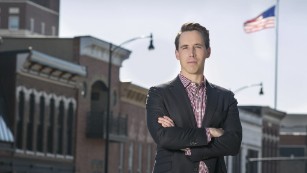
In the afternoon there was a rally where attendees heard from various legislators and government employees including Rep Tracy McCreery, Rep Bruce Franks Jr., Rep Jean Evans, Senator Gina Walsh, Senator Bob Onder, Senator Ron Richard, and Senator Jamilah Nasheed.  MO Attorney General Josh Hawley gave a passionate speech about his dedication to ending all sex trafficking in Missouri and the efforts he has led in the past year including bringing together a coalition of business owners, non-profits, politicians, and law enforcement officials.   

Chiquita Tillman
One of the most powerful testimonies shared was that of Chiquita Tillman, a survivor of sex trafficking.  She courageously shared her story of how she ran away from an abusive household when she was just 15 years old, only to be found and exploited by two different pimps over the next year.  She was finally able to escape thanks to a caring stranger who's family ended up adopting her.  She struggled for many years after that with the trauma she still carried from when she was trafficked, until she was finally able to receive counseling services.  She is now the owner of Rubies INK, LLC and shares about her past to help prevent other young girls from becoming victims.  She is also a strong advocate for more survivor resources and works to empower survivors in their own recovery journies. 
Senator Nasheed

Overall it was a powerful and inspirational day of joining together with others in the fight to end sex trafficking in Missouri and support survivors.  Senator Nasheed shared in her closing remarks that she hopes this tradition will continue in years to come, even after she is out of office. 

Monday, November 20, 2017

Shared Hope Releases Report Cards on State Trafficking Laws

Yesterday, in a briefing on Capitol Hill Shared Hope released  the 2017 Protected Innocence Challenge State Grades!  Watch our livestreamed event here. 

How did your state score? Find out here!

The Protected Innocence Challenge, launched in 2011, is an annual report that grades each state on the strength of their laws to fight child sex trafficking. Each year a toolkit of resources is released to help advocates and legislators improve their laws.

This year's report demonstrates a 7-years of progress in improving state laws that combat child sex trafficking, yet also calls attention to the gaps where states have not progressed. When launched in 2011, 26 states had an “F” grade on 41 points of law that impact child sex trafficking. This year there are now 36 As and Bs. Check out these and other stats on our website


Texas scored an A and Missouri scored a B. 

The major area of improvement needed in Texas is in decriminalizing minors who are victims of human trafficking.  Texas’s sex trafficking law currently criminalizes the use of a minor under the age of 18 in a commercial sex act regardless of force, fraud, or coercion. The prostitution law refers to the sex trafficking law to provide an affirmative defense for sex trafficking victims. Texas’ organized criminal activity law specifically targets trafficking of persons and includes certain CSEC offenses as predicate crimes, allowing use of this law to prosecute sex trafficking networks.

All commercially sexually exploited children are defined as juvenile sex trafficking victims. Texas’s sex trafficking and CSEC laws do not prohibit a defense based on the willingness of the minor to engage in the commercial sex act. Texas’s prostitution laws do not prohibit the criminalization of minors under 18, but case law has held that a child under 14 may not be charged with prostitution. Juvenile sex trafficking victims also face criminalization for commercial sex acts committed as a result of their victimization, but may assert an affirmative defense that she or he was sex trafficked. Additionally, a juvenile sex trafficking victim may be able to avoid a delinquency adjudication through participation in the Trafficking Persons Program, but entrance to the program is not mandated. Further, specialized services are available under the Governor’s Program for Victims of Child Sex Trafficking. For purposes of child welfare involvement, the definition of “abuse” includes child sex trafficking, CSEC, prostitution, and ICSE; additionally, the definition of “abuse” does not include a “caregiver” barrier because abuse may be committed by “a person,” which is broad enough to allow child welfare involvement in non-familial trafficking cases.

For the full Texas report click here 

Missouri criminalizes child sex trafficking without requiring use of force, fraud, or coercion, and the trafficking law includes buyer, trafficker, and facilitator conduct. Further, the definitions of abuse and neglect specifically include child sex trafficking. However, specialized services are not statutorily mandated, and the critical tool of wiretapping is not expressly permitted in trafficking investigations, handicapping law enforcement and prosecutors.

Missouri law expressly prohibits a defense based on the willingness of the minor to engage in the commercial sex act if the victim is under 14; this defense is not prohibited for older minors. Prostitution laws apply to minors under 18, meaning juvenile sex trafficking victims may face criminalization for commercial sex acts committed as a result of their victimization. However, Missouri law mandates referral of juvenile sex trafficking victims to DSS and DJJ for a service and assistance assessment, but access to specialized services is not required. For purposes of child welfare intervention, the definitions of abuse and neglect include child sex trafficking without specifying a relationship between the child and the perpetrator of the abuse.

For the full Missouri report click here 

Thursday, June 29, 2017

El Puente - Jefferson City, MO

El Puente - Ministerio Hispano celebrará 18 años de existencia en septiembre. Trabajamos principalmente con inmigrantes de México, Guatemala, El Salvador, Nicaragua, Puerto Rico, Honduras, Chile, Perú y Ecuador. Los Servicios de Apoyo, específicamente los de atención de Salud ocupan alrededor del 80% de nuestro trabajo. Ayudamos a las madres embarazadas a seguir sus planes prenatales, proporcionando interpretación para ellos mientras interactúan con el sistema de atención médica. Les ayudamos con las solicitudes de seguro y otros servicios de asistencia social que están disponibles para ellos a través de la comunidad. También proporcionamos educación e información sobre la salud en español a través de un profesional calificado en salud. Gran parte de este trabajo se realiza en su hogar. También proporcionamos transporte para citas médicas y servicios de interpretación en hospitales, clínicas y consultorios médicos cuando lo solicitan, tanto la persona que se va a atender,  el hospital, la clínica o el consultorio médico.
El Puente ofrece presencia y apoyo a las comunidades en dos parroquias en nuestra área de servicio. Estamos presentes en las Eucarístias de habla hispana, ayudamos a formar agentes de pastoral, trabajamos con el coro y promovemos experiencias y celebraciones culturales. Fue a través de la asistencia a estas misas que nos enteramos por primera vez sobre la necesidad de servicios de traducción en el área de la salud. Aprendimos que la mayoría de los proveedores de estos servicios no eran bilingües. Ya que podíamos hablar español, a pesar de que estaba en una capacidad limitada al principio, la gente comenzó a pedir nuestra ayuda. Así que exploramos todos los recursos en nuestra área y empezamos a acompañar a la gente para acceder a los servicios que necesitaban. También ayudamos con solicitudes de inmigración y citas judiciales cuando es necesario. Hay una oficina de Refugiados e Inmigración en Jefferson City, que es parte de Catholic Charities, trabajamos estrechamente con ellos en temas de Inmigración.

Los mayores desafíos en este ministerio son las actitudes cerradas de algunas personas hacia los inmigrantes. Es muy difícil crear una base de donadores(as) sostenibles debido a estas actitudes. De hecho dependemos de donaciones, de la generosidad de la Congregación y de la Diócesis para mantener este, nuestro ministerio.
Hemos aprendido mucho del Puente a través de los años. Nuestra población es joven, en su mayor parte con niñas y niños. Así, los pequeños aprenden inglés rápidamente pero los padres luchan debido a los horarios de trabajo o la necesidad de cuidar a sus otros niños pequeños. La mayoría de ellos trabajan por lo menos en dos empleos para poder enviar dinero a sus familias en el exterior. La mayoría de ellos preferiría estar en sus países de origen, pero debido a las condiciones tuvieron que salir o huir para mantener a sus familias. Traen consigo fuertes valores familiares y un rico patrimonio cultural.
Muchos de ellas(os) han tenido que luchar para recibir educación, dejando la escuela a una edad temprana para ayudar a sus familias. Vienen de países donde la guerra, el abuso, la opresión y la falta de ingresos les han marcado.

Nuestra esperanza, que es nuestra Declaración de Visión, es que nuestros vecinos hispanos prosperarán en la iglesia y la sociedad. Gran parte de esa esperanza está en la juventud. Estarán sanos, educados y tienen habilidades de liderazgo para salvar la brecha entre sus padres y el futuro. Dada la posibilidad de que sean ciudadanos muy productivos y tengan una gran influencia en el futuro de nuestro país.


Por Sr. Peggy Bonnot


Wednesday, June 28, 2017

Reflecting on El Puente Ministry in California, MO

El Puente Ministry – California, MO
By Sr. Guadalupe Ruiz

I serve in California, Missouri which is a small town of 4268 residents.  My ministry is through the Annunciation Parish in collaboration with El Puente ministry based in Jefferson City, MO.  I have been working here since October of 2010, so almost seven years. 

Church picnic at Annunciation Parish
I serve the Hispanic community here, which is mostly made up of Mexicans from the areas of Michoacan and Guanajuato, and also some families from Central America.  Most come from small farming communities, and have immigrated to the United States in search of work and better opportunities for their families. 

The biggest need is the lack of English language fluency in the older adults, and so I assist them as an interpreter, accompanying those who need translation help to doctor appointments, hospitals, lawyer visits, court appearances, and to the immigration offices.

In the parish, the most urgent need is to prepare leaders so that the community can grow and little by little become more self-sufficient.  It is a slow and long process because many lack strong formal education, however their faith, inherited from their elders, is a great value that they bring with them.  
One of the challenges of the immigrant communities in California is for the newest generation growing up who were born in this country.  They can speak with English fluency from attending the schools, and are less fluent in the Spanish of the older generation because they prefer to speak English with their friends and classmates.  They are called the “nini” generation because they are neither (ni) from here, nor (ni) from there.  That is to say they don’t have the strong roots their parents brought from their country of origin but at the same time they aren’t anglo and don’t fully fit in here in the U.S.  Their challenge is to find their identity as Hispanics born in the USA. 

Daily living and accompany these simple and wonderful people I am reminded of the words of Jesus, “that which you did unto the least of these, you did unto me…”  Some of the most impactful experiences I have had these past few years has been accompanying people in their legal processes, going with them to court appearances, visiting in jail, seeing them denied their freedom and even deported.  It is truly a painful process to witness.  Many families are separated due to convictions of having entered the country unlawfully.  I have had the opportunity to get to know the judge, and he is a very humane person who cares, but who also has to comply with his duty to enforce the law.  However, ensuring that the human dignity of all people is respected brings to life in me the mission of the Congregation. 

During these times of uncertainty with the new laws being passed, the Hispanics I work with offer me an example of hope and faith in God.  Their trust in the providence of God which will not abandon them is great.  One woman told me, “If God wants me to stay, I will stay, and if God’s will is that they send me back to Mexico I will go, because it will be what God wants.” 

I am grateful to Sr. Marinela Flores who invited me to come to this small town and serve our immigrant brothers and sisters.  It has been a great opportunity, challenge, and way to make present the saving and healing love of the Incarnate Word.

Reflecting on El Puente Ministry in Jefferson City

El Puente Ministry – Jefferson City, MO
By Sr. Peggy Bonnot

El Puente – Hispanic Ministry will celebrate 18 years of existence in September.  We engage primarily with immigrants from Mexico, Guatemala, El Salvador, Nicaragua, Puerto Rico, Honduras, Chile, Peru, and Ecuador.  Support Services, specifically Health Care, occupies about 80% of our work.  We help pregnant moms follow their prenatal plans, providing interpretation for them as they interact with the health care system.  We help them with insurance applications and other social service assistance that is available to them through the community.  We also provide health education and information in Spanish by a qualified health educator.  Much of this work is done in their home.  We also provide transportation to medical appointments and interpretation services at hospitals, clinics and doctors’ offices for clients when requested by the individual, hospital, clinic or doctor’s office.

El Puente offers a ministry of presence and support to the communities in two parishes in our service area.  We are present at the Spanish Masses, help to train ministers, work with the choir, and promote cultural experiences and celebrations.  It was through attending these Spanish Masses that we first learned of the need for translation services in this area.  We learned that most service providers were not bilingual.  Since we could speak Spanish, even though it was at a limited ability in the beginning, people started asking for our help.  So we explored all the resources in our area and started accompanying people to access the services they needed.  We also help with immigration applications and court appointments when needed. There is an office of Refugee and Immigration in Jefferson City, which is part of Catholic Charities.  We work closely with them on Immigration issues.

The biggest challenges in this ministry are the closed-minded attitudes of some people toward immigrants.    It is very difficult to build up a sustaining donor base because of such attitudes.  We are very dependent on grants, the generosity of the Congregation, and the diocese to keep our ministry going.

We have learned much from our ministry over the years.  Our population is young, child-bearing age for the most part.  Their children learn English quickly, but the parents struggle because of work schedules or the need to care for their other young children.  Most of them work at least two jobs to be able to send money to their families back home.  Most of them would prefer to be in their home countries, but because of the conditions at home they must leave or flee to support their families.  They bring with them strong family values and a rich cultural heritage.  Many of them have had to struggle to receive an education, leaving school at a young age to help their families.  They come from countries where war, abuse, oppression and lack of income has scarred them.

Our hope, which is our Vision Statement, is that our Hispanic neighbors will thrive in church and society.  Much of that hope is in the youth.  They will be healthy, educated, and have leadership skills to bridge the gap between their parents and the future.  Given a chance they will be very productive citizens and have a great influence on the future of our country.

Responding to the Needs of the Immigrant Community

Responding to the Needs of the Immigrant Community
By Sr. Anne Marie Burke 

When I returned from my ministry in Peru in January of 2015 the Generalate team invited me to discern where I could best serve in the U.S. After a time of discernment, I felt that God was calling me to minister to immigrants, especially to Latin-Americans since Spanish is my second language.

From March –May, 2015 I volunteered 2-3 days per week with the IWC (Interfaith Welcome Coalition) which the First Presbyterian Church coordinated in San Antonio. I served at the Casa Mennonite guest house where immigrants from the Dilley and Karnes City detention centers came for shelter until they continued to their destination.  Usually their stay was for a night or two. Hospitality, food, a place to rest, a shower, clean clothes, legal advice, health care, counseling service, transportation, communication with family and friends were offered.  RAICES (Refugee and Immigrant Center for Education and Legal Services) collaborated in the project in a big way. The majority of the immigrants were from Honduras, Guatemala, El Salvador and Mexico.

From March 15th to April 11th I volunteered in El Paso at the Nazareth Hospitality Center for immigrants coming from the ICE (Immigration and Customs Enforcement) retention center in El Paso.  Nazareth Hospitality Center is an extension of Annunciation House directed by Ruben Garcia. The volunteers worked on shifts: 7.00 a.m. – 2.00 p.m., 2.00.p.m. -10.00 p.m. and one volunteer stayed overnight in the center. The services offered to the immigrants were the same as in San Antonio and were more organized. The number of persons was bigger: 30 – 40 per night.  People came from Bolivia, Brazil, Cuba, El Salvador, Guatemala, Honduras. Mexico, Ethiopia. Most of the women had small children with them.

My experience at Nazareth Hospitality Center was a time to serve the people on their way to liberation. As I reflect on my experiences there I am aware of God’s loving care of the poor and suffering manifested in the caring volunteers, and how we participate in God’s redemptive love as we serve each other in solidarity.  I am humbled and thank God for all His blessings in our lives and for the opportunity to receive and share His love with others.

From May to June 2016 I joined Sister Cathy Vetter in St. Louis Mo. to see what possibilities of immigrant ministry were available. Cathy gave me some contacts and I visited various institutions and spoke with Sisters from different Congregations who minister to immigrants. In my discernment I chose St. Louis because the immigrants are settled there.

I went to San Antonio for my annual Retreat and I returned to St. Louis at the end of July and joined the CCVI Lumen Christi Community.  The beginning of August 2016 I started as a volunteer interpreter at the Casa de Salud clinic, and I was available for Mondays, Wednesdays and Fridays. I served there till March 2017.

In October, 2016 on Tuesdays and Thursdays 12.00 – 3.00 p.m. at Our Lady of Guadalupe School I started tutoring Kindergarten children who speak Spanish in their home. In April 2017 I started tutoring Monday – Friday till May 25th the last day of the school year. I will return in the middle of August when the new year begins.  On Saturdays I volunteer at St. Vincent de Paul Society Caritas thrift shop sorting clothes and putting them out on the racks. The income goes to help the Food Pantry. Many immigrants come to buy at the store.

Monday, May 1, 2017

MO Attorney General Commits to Fight Against Human Trafficking

(CNN) - April 3, 2017
More than 150 years after Lincoln's Emancipation Proclamation, slavery is illegal almost everywhere. But it is still not abolished -- not even here, in the land of the free. On the contrary, there is a cancer of violence, a modern-day slavery growing in America by the day, in the very places where we live and work. It's called human trafficking. The time has come for a new abolitionist movement to confront this oppression and turn it back.
Each year, thousands of people, usually women and girls, are deceived, threatened or simply forced into commercial sexual exploitation. That is, they are forced to provide sex for money. Don't be misled, this isn't a crime confined to exotic locales. It happens all the time, even in a neighborhood near you. Sex trafficking occurs when a young woman is forced into prostitution at a truck stop; when a sexual predator lures a teen on the internet; when a family member makes a child sell sex for cash.
    Josh Hawley is the attorney general of Missouri.
    The International Labor Organization estimates that 4.5 million people are trapped in commercial sex exploitation worldwide, 98% of them female. Since 2007, the National Trafficking Hotline in the United States has received more than 31,000 reports of trafficking happening in this country. Nearly 2,000 calls to the NTH have come from my home state of Missouri.
    Sex trafficking amounts to a form of slavery: It is forced, unchosen labor. Left unchecked, it threatens to disfigure our society. That's a danger I take personally. As attorney general of Missouri, I am my state's chief law enforcement officer. I swore an oath to uphold the rule of law, and that means fighting violence and oppression wherever it exists, especially violence against the poor and vulnerable. The swelling epidemic of human trafficking makes a mockery of the law and its protections. Confronting this evil demands new thinking and decisive new action. And this is my pledge: In Missouri we will act, and we will act now.

    Today I am issuing new regulations, which my office understands to be the first of their kind in the nation, that will deploy Missouri's consumer protection laws to target traffickers. It's a bold new approach designed to open a new front in the fight against trafficking.
    Traffickers have become adept at evading the criminal laws currently on the books. Those laws can be difficult to enforce, not least because trafficking frequently involves activities committed in multiple jurisdictions and across state lines.
    That makes trafficking cases time-intensive for law enforcement, and costly. And the truth is, many local police and prosecutors simply do not have the resources, time, training or manpower to bring a traditional criminal case involving trafficking to trial. The traffickers know it. As one recently boasted to a researcher from the Urban Institute, "You don't get locked up for pimping. Who gets locked up for pimping?" 
    We need a new approach. Unfair and deceptive business practices have been illegal in most states for decades. Yet traffickers routinely use what appear to be legitimate businesses—massage parlors, bars, nail salons—as fronts for their illegal exploitation. It's the ultimate business scam. As of today, that practice is illegal in the state of Missouri.
    Here is how the new regulations will work: If traffickers attempt to use a business in Missouri to mask their criminal enterprise, we will find them out. We will shut them down. And using our consumer protection statutes, we will hold them liable, with both civil and criminal penalties. That goes for anyone involved in the traffickers' enterprise.